
Standing Committee on Transport, Infrastructure and Communities (TRAN) - November 6, 2025 - Secretary of State (Canada Revenue Agency and Financial Institutions) binder
Disclaimer
We do not guarantee the accuracy of this copy of the CRA website.
Scraped Page Content
Standing Committee on Transport, Infrastructure and Communities (TRAN) - November 6, 2025 - Secretary of State (Canada Revenue Agency and Financial Institutions) binder
On this page
- Opening Remarks
- Issue notes
- Supporting Documentation
- Canadian Trucking Alliance TRAN Submission - October 2025
- CRA Fact Sheet on PSBs
- Minister of National Revenue News Release ‘Strengthening Compliance in the Trucking Industry: CRA and Labour Program Sign Information-Sharing Arrangement’ – March 2025
- CRA Reporting fees for service online questionnaire – What we learned
- CRA Reporting fees for service external stakeholder working group – What we heard
- Federal Responsibilities for Non-Compliance in Trucking Industry
- Personal Services Businesses in the Trucking Industry – Key Timeline
- Department of Finance Canada News Release ‘Minister Champagne clamps down on Driver Inc. scheme in Budget 2025’ – October 30, 2025
- Canadian Trucking Alliance News Release ‘Ottawa To lift T4A Moratorium in Major Step Towards Combating the Underground Economy in Trucking’ – October 30, 2025
- Parliamentary information
- Relevant TRAN Meetings
Opening Remarks
Mr. Chair, thank you for the opportunity to discuss the work that the Canada Revenue Agency is undertaking to uphold tax compliance in the trucking industry.
Resolving issues that affect the social benefits of drivers in the sector, and the security of Canadians on our roads calls for the action of federal and provincial, colleagues in a variety of sectors. Today, I will highlight the CRA’s efforts in this area, supported by two key measures recently announced in Budget 2025.
The CRA recognizes that there is a growing trend in the trucking industry where individuals incorporate in order to provide services to another company.
Under the Income Tax Act, these individuals are sometimes considered to be operating as a personal services business (PSB).
Generally, a PSB exists when the individual performing the work would be considered an employee of the hiring company if it weren’t for the existence of the corporation. Operating as a PSB is legitimate, but it comes with tax obligations.
PSBs have to pay an extra 5% tax on top of the regular corporate tax rate; they cannot use the general tax reduction which reduces the corporate tax rate by 13%; they cannot claim the small business deduction; and they cannot claim deductions available to other corporations, such as cellphone expenses or subcontracting fees.
For example: In Ontario, a truck driver operating a PSB would face a corporate tax rate of 44.5% compared to the 12.2% corporate tax rate paid by a regular small business.
Mr. Chair, the Canadian Trucking Alliance and other witnesses have voiced their concerns that the trend of companies encouraging drivers to incorporate has increased. That is why the government is taking action with a balance between education and enforcement.
On October 30, 2025, the Government of Canada announced its intention as a part of Budget 2025 to invest $77 million over four years, with ongoing funding of $19.2 million annually, to support the CRA in addressing compliance issues within the trucking industry.
This proposed funding would enable the CRA to lift the moratorium on the penalties for failing to report fees for service transactions in the trucking industry, and to implement a program that addresses non-compliance related to personal services businesses and reporting fees for service.
In addition, the government is proposing amendments to the Income Tax Act and the Excise Tax Act that would enable the CRA to share taxpayer and confidential information with Employment and Social Development Canada to more effectively address the issue of driver misclassification in the trucking industry.
Furthermore, the CRA has been working closely with federal and provincial partners to educate drivers and promote compliance in the trucking industry. Joint operations at trucking weigh stations across the country provide the CRA with an important opportunity to raise awareness about the unique tax obligations of a PSB, and answer questions on the spot.
Mr. Chair, these in-person interactions supplement the educational efforts the CRA has been making for years, which include webinars, fact sheets in 10 languages, and detailed information available on Canada.ca.
When the CRA identifies a PSB that hasn’t met its tax obligations, it will continue to take the necessary enforcement actions to address the issue as part of its commitment to upholding the law.
Mr. Chair, the government has heard the concerns from the trucking industry loud and clear. By working together, we can ensure that drivers and the companies that hire them in the trucking industry understand the rules, that they are applied consistently, and that compliance action is taken when they are not followed.
Thank you.
Issue notes
Reporting Fees for Services - Moratorium
Issue
The Canadian Trucking Alliance (CTA) is calling upon the CRA to lift the moratorium on penalties in reference to Reporting fees for services (RFS) as a solution to address non-compliance in the trucking industry. In 2011, a moratorium on assessing penalties for failing to complete box 048, Fees for services, of the T4A slip was introduced as a temporary measure following concerns raised by stakeholder organizations. The Government of Canada announced, as part of Budget 2025, the lifting of the moratorium on assessing penalties for failure to complete box 048 of the T4A slip for the trucking industry.
Key Points
- In 2011, a moratorium on assessing penalties for failing to complete box 048, Fees for services, of the T4A slip was introduced as a temporary measure.
- In recognition of concerns raised by the trucking industry, the Government of Canada has announced that it will be lifting this moratorium for businesses in the trucking industry.
- With this change, the CRA will improve its access to third-party information to verify income and expenses reported by businesses in the trucking industry.
- The information obtained from the lifting of the moratorium will support the CRA’s ongoing and future compliance activities in the trucking industry to ensure payers and workers meet their tax obligations.
- The CRA will publish further details to assist the trucking industry in meeting this requirement.
Background
In 2011, a moratorium on assessing penalties for failing to complete box 048 of the T4A slip was introduced. As this requirement applies to all businesses and many organizations, including charities and governments, the moratorium was meant to allow businesses the opportunity to gain familiarity with the changes and time to adopt practices to support compliance with the RFS requirement. Though it was intended as a temporary measure, the moratorium remains in place. In recent submissions, the CTA has claimed that the 2011 moratorium has led to an increase in the use of personal services businesses (PSBs) in the trucking industry and massive tax non-compliance.
In consideration of lifting the moratorium, the CRA undertook public opinion research in 2020. In 2022, the CRA began reaching out to key stakeholder groups, including the National Payroll Institute, the Chartered Professional Accountants of Canada, the Canadian Trucking Alliance, the Canadian Federation of Independent Business, and the Tax Executives Institute to provide them with early notification of its intention to undertake consultations. Early discussions with these key stakeholder groups highlighted some concerns related to the T4A as a reporting vehicle, the current reporting threshold of $500, the perceived administrative burden, and the lack of clarity around reportable services.
Recognizing the broad impact of the requirement and the value of stakeholder feedback, the CRA established a multi-stakeholder working group to provide feedback on the best way forward.
The working group participants provided the CRA with valuable insights on:
- the administrative burden that businesses and organizations face when it comes to RFS compliance and potential ways to minimize the burden;
- potential reporting vehicle options and reporting thresholds for the RFS requirement, as well as potential exemptions;
- the lack of clarity surrounding what is considered a reportable service; and
- the need for enhanced communication products and educational resources to support businesses and organizations in complying with this tax obligation.
The CRA also released an online public questionnaire from May 22 to July 22, 2024, to Canadian businesses and organizations of all sizes who wished to provide feedback on the RFS requirement.
The responses provided insights on the challenges Canadian businesses and organizations are facing in order to comply with RFS. These challenges related to three key aspects of the RFS requirement:
- the reporting vehicle;
- the reporting threshold; and
- the administrative burden.
The feedback from these consultations were published on Canada.ca.
PSB Obligations
Issue
There is a growing trend in certain industries where individuals may choose or be asked to incorporate in order to provide services to another company that could reasonably be provided by an employee of that company. An individual operating under this business structure is often considered to be a personal services business (PSB), or an incorporated employee.
Key Points
- Operating as a PSB is not illegal. Businesses may choose to set their affairs as they see fit, provided their tax obligations are met.
- A PSB is subject to specific rules under the Income Tax Act, and therefore has different tax obligations compared to other corporations.
- A PSB is not entitled to claim certain deductions, such as the small business deduction or the general tax rate reduction, and most standard business expenses. As a result, they are subject to the full federal and provincial corporate tax rates, as well as an additional 5% tax on all taxable income.
- A worker or employee of a PSB is responsible for filing an income tax and benefit return as an individual.
- In situations where payers and workers do not fulfill their tax obligations, they may be subject to enforcement actions which can result in the assessment of taxes owing and related penalties and interest.
Background
Under the Income Tax Act, a worker may legally choose to incorporate and provide their services to another company or another business through a corporation. In some instances, a worker under this structure may be considered to be a PSB.
PSBs, sometimes referred to as incorporated employees, are individuals who incorporate their business and who:
- are hired to provide services for another company that would usually be performed by one of its employees
- if not for the existence of the corporation, would be considered an employee of hiring company
- use equipment and/or tools provided by the hiring company to perform those services
- are likely the only shareholder and the only employee of the corporation or employ no more than five full time employees throughout the year
Incorporating and being hired by another company is not an illegal practice under the Income Tax Act. Generally, a PSB exists where the individual performing the work would reasonably be considered an employee of the hiring company if it were not for the existence of the corporation through which they are providing the services.
However, it is important to note that PSBs have different responsibilities, benefits, and entitlements compared to regular employees and regular corporations and must follow specific rules of the Income Tax Act. For example:
- PSBs must follow the full federal and provincial corporate tax rates on all taxable income, plus an additional 5% tax.
- PSBs are responsible for filing a T2 corporation income tax return and completing Schedule 7, Aggregate Investment Income and Income Eligible for the Small Business Deduction, to report income from a PSB.
- If the PSB has employees, it has the same withholding and reporting obligations as other employers.
A worker or employee of a PSB is responsible for filing an income tax and benefit return as an individual. Additionally, if a PSB provides goods or services and earns more than $30,000 over the previous four (or fewer) consecutive calendar quarters, they are required to open a GST/HST account, and subsequently collect, file and remit (pay) the GST/HST.
Amounts paid to a PSB by a hiring company for services provided are considered business income, not salary and wages. This means that a hiring company does not withhold income tax, contributions to the Canada Pension Plan (CPP) or the Quebec Pension Plan (QPP), or Employment Insurance (EI) premiums on the amounts they pay to PSBs.
PSB Compliance
Issue
The Canada Revenue Agency (CRA) is aware of concerns raised by the trucking industry regarding tax non-compliance of personal services businesses (PSBs). To this end, the CRA has undertaken efforts, including through close collaboration with Employment and Social Development Canada, to address instances of non-compliance in the trucking sector.
Key Points
- Due to confidentiality and privacy considerations, we are not at liberty to disclose specific enforcement activities or outcomes.
- However, the CRA can confirm that PSBs are reviewed to ensure compliance with their tax obligations, including through the regular compliance activities of the CRA.
- When PSBs do not fulfill their tax obligations, they may be subject to enforcement actions which can result in the assessment of taxes owing and related penalties and interest.
- For PSBs, reassessed amounts can include disallowed small business deductions, an additional 5% tax rate specific to PSBs, and ineligible expenses.
- In March 2025, an information-sharing arrangement between the CRA and the Labour Program at ESDC was signed to support the CRA’s existing compliance efforts in the federally regulated road transportation sector
Background
The Canadian Trucking Alliance (CTA) has been engaging the Canada Revenue Agency (CRA) since 2018 on the practice of drivers incorporating as personal services businesses (PSB) in the trucking sector. The CTA refers to this model as “Driver Inc.”, citing the practice as illegal and a part of the underground economy costing at least $1 billion a year in lost tax revenue (the CTA recently published information on the $1 billion figure and the Agency is reviewing the underlying analysis of the estimate).
The CRA protects the fairness and integrity of Canada’s tax system for all individuals with a balance of education and enforcement. When non-compliance is identified, the CRA will take action, either with an educational approach or enforcement.
The confidentiality provisions of the legislations administered by the CRA restrict what the CRA is allowed to share regarding its enforcement activities to ensure compliance with the tax obligations of PSBs.
Payers and workers, including personal services businesses (PSBs), are reviewed as part of the regular compliance actions of the CRA. These compliance activities ensure that PSBs are not incorrectly claiming deductions they are not entitled to and verifying they are meeting their filing and reporting obligations. In situations where payers and workers do not fulfill their tax obligations, they may be subject to enforcement actions which can result in the assessment of taxes owing and related penalties and interest.
For PSBs, reassessed amounts can include disallowed small business deductions, an additional 5% tax rate specific to PSBs, and ineligible expenses.
If an individual believes they are operating as a Personal Services Business (PSB) and their tax returns have been filed incorrectly, the Voluntary Disclosures Program may be an option to help correct them, provided they meet the eligibility requirements.
Anyone with information about suspected tax non-compliance can report it anonymously through the CRA’s Leads Program. This program allows individuals to provide tips online, by phone, or by mail.
As outlined in Budget 2024, the CRA and the Labour Program of Employment and Social Development Canada (ESDC) signed an Information Sharing Arrangement in March 2025 to facilitate inspections and enforcement in the federally regulated road transportation sector. This arrangement is providing the CRA relevant information from the Labour Program that is supporting CRA’s existing compliance activities in this sector.
The CRA remains committed to supporting payers and workers in understanding and complying with their tax obligations, while simultaneously delivering on its mandate to address non-compliance.
PSB Education and Outreach
Issue
In response to concerns raised by the industry, the CRA is addressing non-compliance in the trucking sector by leveraging both traditional compliance actions as well as education and assisted compliance.
Key Points
- To ensure individuals are aware of and understand PSB tax obligations, the CRA has published a wide range of resources.
- These include a fact sheet highlighting the tax and reporting obligations for PSBs available in both official languages and in ten additional languages, a webinar, and detailed information on Canada.ca.
- In 2022, the CRA launched a two-phase pilot project to examine the PSB population across various sectors, assess taxpayers’ level of understanding regarding the unique tax obligations of PSBs, and educate businesses on how to comply.
- Recently, the CRA has been collaborating with federal and provincial partners to distribute this fact sheet to truck drivers as part of ongoing joint educational operations at trucking weigh stations across the country.
- Since the summer, CRA officials have participated at in-person educational events at trucking weigh stations in Alberta, Saskatchewan, Ontario, and Manitoba with ESDC and provincial ministries of transportation.
- In tandem with our ongoing compliance work, the CRA will continue to undertake robust education and outreach activities to ensure PSBs are aware of their unique tax obligations.
Background
In 2024 the CRA completed its two-phased PSB pilot aimed at analyzing the business practices of PSBs and the businesses that hire them in order to help them better understand their tax obligations.
- The first phase of this pilot, which was finalized in December 2022, allowed the CRA to learn more about the businesses that hire PSBs, and gave us the opportunity to help them comply with their tax filing obligations.
- The second phase of this pilot, which ran from October 2023 to June 2024, focused on potential PSBs (payees), to identify whether they are operating as a PSB and reasons for potentially incorporating while also educating them on a PSB’s tax filing obligations.
The CRA has published the findings for both phases at canada.ca/personal-services-business-pilot. The information gathered from the first and second phases of the personal services business pilot is informing the CRA’s continuing education and compliance activities related to the trucking industry.
Additionally, the CRA has developed and continues to update a number of resources available to assist individuals in determining if they are operating as a PSB and, if so, help familiarize them with their specific tax obligations. These include a webinar, detailed information on Canada.ca, and a fact sheet highlighting the tax and reporting obligations for PSBs. This fact sheet was made available in both official languages and in ten additional languages on Canada.ca.
The CRA continues to collaborate closely with federal (ESDC and Transport Canada) and provincial partners (Revenu Québec, provincial ministries of transportation and Workers Insurance and Compensation Board of Ontario) on outreach to the trucking industry to provide education. This includes participation at in-person at trucking weigh station operations in the provinces of Alberta, Manitoba, Ontario and Saskatchewan. At these in-person events, CRA officials, in collaboration with Labour Program and provincial counterparts, speak to drivers and educate them, including through the sharing of educational materials, about the unique tax obligations of a PSB.
RFS Obligations
Issue
The Canadian Trucking Alliance (CTA) is calling upon the CRA to lift the moratorium on penalties in reference to Reporting fees for services (RFS) as a solution to address non-compliance in the trucking industry. RFS is the legislated requirement for businesses and organizations to report fees paid to other businesses for services provided. The Government of Canada announced, as part of Budget 2025, the lifting of the moratorium on assessing penalties for failure to complete box 048 of the T4A slip for the trucking industry.
Key Points
- Reporting fees for service (RFS) is the legislated requirement to report fees paid to other businesses for services.
- Under the RFS requirement referred to in Budget 2025, if your trucking business pays a fee to another business to provide a service exceeding $500, you need to report the payment under and issue a T4A slip.
- For example, if a trucking company hires a driver who is not an employee of the company, the hiring company would need to report the payment on a T4A slip in box 48 – Fees for services and issue a T4A slip to the driver by the last day of February.
- The hiring company will also need to file the T4A slip submitted to the driver, as well as a T4A summary outlining all T4A slips issued in the calendar year, with the CRA by the last day of February.
- Failure to report fees for services or issue and file a T4A slip by a business in the trucking industry can result in penalties for each unfiled slip.
- The CRA will publish further details to assist the trucking industry in meeting this requirement
Background
Under the Income Tax Act, RFS is the legislated requirement for businesses and organizations to report to the CRA fees for services that exceed $500 in a calendar year paid to other businesses.
Those who are required to report fees for service include, but are not limited to, businesses of all sizes (including sole proprietorships and large corporations), charities and non-profits, municipal, provincial, and territorial governments, Government of Canada departments and agencies, as well as public bodies performing a function of government in Canada.
In Budget 2025, the Government of Canada announced that the CRA would lift the moratorium on assessing penalties for failure to complete box 048 of the T4A slip for the trucking industry to support work being undertaken by the Agency to address non-compliance in the road transportation sector.
Generally, a payment for a service is an amount paid for the actions of serving, helping or benefitting another (for example: legal advice, house cleaning, consulting services) or the physical or intellectual work itself, not the article of trade or commerce or tangible finished product produced by that work.
If a payment for services is made by a business in the trucking industry, a T4A slip will need to be issued to report the payment as fees for service if the payment meets all of the following conditions:
- The payment was not made to an employee
- The individual, trust, partnership or corporation provides a service for a fee
- The fee amount is paid in excess of $500 for the calendar year.
Supporting Documentation
Canadian Trucking Alliance TRAN Submission - October 2025
Driver Inc. Misclassification and Noncompliance in the Canadian Trucking Industry
CRA Fact Sheet on PSBs
Fact sheet – Personal services business
Minister of National Revenue News Release ‘Strengthening Compliance in the Trucking Industry: CRA and Labour Program Sign Information-Sharing Arrangement’ – March 2025
CRA Reporting fees for service online questionnaire – What we learned
Reporting fees for service: Online questionnaire - What we learned report
CRA Reporting fees for service external stakeholder working group – What we heard
Reporting fees for service external stakeholder working group – What we heard – Summary
Federal Responsibilities for Non-Compliance in Trucking Industry
Canada Revenue Agency
- Under the Income Tax Act (ITA), if a worker is incorporated and their corporation is being paid by the hiring company for its services that would traditionally be provided by an employee of that company, the corporation is generally considered a personal services business (PSB). Operating a PSB or working as an incorporated employee is not illegal.
- A PSB is subject to specific rules under the ITA, and, therefore, has different tax obligations compared to other corporations.
- A PSB is not entitled to claim certain deductions, such as the small business deduction, the general tax rate reduction, and most standard business expenses. As a result, they are subject to the full federal and provincial corporate tax rates, as well as an additional 5% tax on all taxable income.
Employment and Social Development Canada (ESDC), Labour Program
- Responsible for the administration and enforcement of the Canada Labour Code (CLC). The CLC provides labour standards protections for employees in federally regulated industries, which includes road transportation services that cross provincial or international borders.
- Under the CLC, a person paid to perform work for an employer is, by default, presumed to be their employee, and therefore entitled to the full range of labour standards protections, and occupational health and safety protections. An employer who treats a worker as an independent contractor when they should be considered an employer is in contravention of the CLC.
- If non-compliance is found, ESDC may impose:
- compliance orders
- payment orders with administrative fees
- Administrative Monetary Penalties (AMPs)
- public naming of employers, or
- prosecution
Transport Canada (TC)
Responsible for certain operational matters relating to commercial vehicles (transit buses, motor coaches, trucks) that cross provincial/territorial boundaries and the Canada-U.S. border under the Motor Vehicle Transport Act (MTVA).
Provincial/territorial regulations govern the operation of the commercial bus and truck industry except for the rules and regulations Transport Canada sets in support of the safe operation of federally-regulated (extra-provincial) motor carriers and commercial vehicle drivers. The federal government only has authority over extra-provincial truck and bus carriers that carry goods or passengers across a provincial or international boundary.
TC oversees two key MTVA federal regulations that set the hours of work and rest rules for federal motor carriers and their drivers, and the issuance or revocation of Safety Fitness Certificates. The MVTA authorizes provinces and territories to enforce these regulations on TC’s behalf.
TC works with the provinces/territories to advance a consistent, national approach to commercial motor vehicle safety through the Canadian Council of Motor Transport Administrators (CCMTA). This includes administration, oversight and maintenance of the National Safety Code (NSC) for motor carriers, which sets out a number of operational safety.
Personal Services Businesses in the Trucking Industry – Key Timeline
Since the issue was first raised by the Canadian Trucking Alliance (CTA) in 2018, the CRA has undertaken a variety of educational, outreach, and compliance activities pertaining to the issue of tax non-compliance in the trucking industry. This timeline provides a high level overview of specific engagements and activities on the topic in addition to the regular compliance activities and ongoing engagement with external stakeholders and Government of Canada partners undertaken by the CRA.
- 2018: In January, the Canadian Trucking Alliance (CTA) raised concerns regarding the practice of “Driver Inc.” in the trucking industry. CRA met with representatives from the CTA and developed two educational documents for the trucking industry to help them determine the employment status of truck drivers and address tax obligations for personal services businesses (PSBs). In September, the CRA attended the CTA’s fall board meeting to provide an overview of the new educational documents and explained the tax obligations for the different types of working arrangements.
- 2019-2020: The CRA undertook work to develop a pilot project on PSBs, which was put on hold due to the COVID-19 pandemic. Concurrently, CRA officials continued to meet with CTA to address concerns from the industry, including the development and update of communications materials and webpages to raise awareness of PSB obligations.
- 2022: The CRA launched the first phase of a two phase pilot project to examine the PSB population across various sectors. Between June and December 2022, Agency officials contacted more than 2,100 Canadian corporations across a variety of industries with the potential to hire PSBs, and invited them to participate in a voluntary educational outreach activity. CRA officials announced the launch of the pilot during meetings with the CTA to inform them of the CRA’s planned educational reviews of PSBs, including those in the trucking industry. The CRA hosted a webinar providing information on how to determine if a business is operating as a PSB and the associated tax obligations.
- 2023: The CRA launched the second phase of the PSB pilot. Between October 2023 and June 2024, the CRA contacted approximately 2,100 Canadian corporations who were identified from a list of potential PSBs across a variety of industries. The businesses were invited to participate in a voluntary review to determine if they are operating as a PSB. The CRA published a number of educational products, including web and social media content. Concurrently, the CRA began undertaking compliance actions on referrals of trucking industry files received during the pandemic.
- 2024: The CRA launched engagements to better understand Canadian businesses' and organizations' awareness of and readiness to comply with the reporting fees for services requirement, including an online questionnaire and a working group with key stakeholder organizations representing businesses of varied industries and sizes across Canada. CTA, while not a member of the working group, was provided with early notification of the consultations and were engaged with separately as they represented just one industry sector. The CRA also published an educational PSB fact sheet in 10 additional languages.
- 2025: The CRA and the Labour Program at ESDC signed an Information Sharing Arrangement (ISA) to facilitate inspections and enforcement in the federally regulated road transportation sector. The CRA began collaborating with ESDC and provincial partners to engage directly with truck drivers and provide educational materials as part of ongoing joint outreach operations at truck inspection and weigh stations across the country.
Department of Finance Canada News Release ‘Minister Champagne clamps down on Driver Inc. scheme in Budget 2025’ – October 30, 2025
Minister Champagne clamps down on Driver Inc. scheme in Budget 2025
Canadian Trucking Alliance News Release ‘Ottawa To lift T4A Moratorium in Major Step Towards Combating the Underground Economy in Trucking’ – October 30, 2025
Parliamentary information
TRAN Member profiles
Chair of the committee – Peter Schiefke (Vaudreuil – Soulanges, Québec)
Liberal
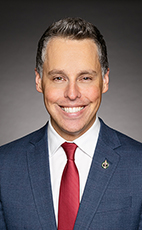
MP Peter Schiefke was first elected as a Member of Parliament by the citizens of Vaudreuil-Soulanges in October 2015. Shortly thereafter he was appointed as the Parliamentary Secretary for Youth by Prime Minister Trudeau and in 2018 was given the additional responsibilities of Parliamentary Secretary to the Minister of Border Security and Organized Crime Reduction. In 2019, MP Schiefke was re-elected and was shortly thereafter appointed as the Parliamentary Secretary to the Minister of the Environment and Climate Change. In March 2021, Prime Minister Justin Trudeau asked him to take on the role of Parliamentary Secretary to the Minister of Immigration, Refugees and Citizenship.
Prior to entering politics, MP Schiefke worked in numerous capacities lending his expertise in sustainable development to both domestic and international causes. His passion for positive social change inspired his work as the Director and Co-Founder of Youth Action Canada, the CEED Program based in Uganda, East Africa and his work as the National Director of Climate Reality Canada, an organization founded by former US Vice-President and Nobel Laureate Al Gore. For his work he has been awarded a Federal Minister’s Commendation, the YMCA Peace Prize and the Forces Avenir Award for Peace Justice and Humanitarian Aid.
MP Schiefke holds a Bachelor of Arts in Political Science from Concordia University as well as a Master of Science in Renewable Resources from McGill University.
Member of the following Committee(s):
- Standing Committee on Transport, Infrastructure and Communities
- Standing Committee on Natural Resources
Issues raised relating to the Transport Canada portfolio:
- Investments by railway companies in local communities
- Investments in public transit
- Deployment of zero-emission vehicles
Mike Kelloway (Sydney – Glace Bay, Nova Scotia)
Parliamentary Secretary to the Minister of Transport and Internal Trade
Liberal

Parliamentary Secretary Kelloway grew up in Glace Bay and pursued a Bachelor of Community Studies at Cape Breton University. He furthered his studies by completing his graduate studies in Education from the University of Calgary.
Before entering federal politics, PS Kelloway has worked as a youth worker and entrepreneur to College lecturer, from the extension department at Cape Breton University to his previous position as a special project administrator at the Nova Scotia Community College. His titles have included Dean of Flexible Learning, Senior Manager of Customized Learning and Entrepreneurship, and most recently, Community Innovation Lead for Cape Breton and North Eastern NS.
MP Kelloway was first elected as the MP for Cape Breton – Canso during the 2019 federal election. Since winning election, MP Kelloway has served in multiple roles, including as Parliamentary Secretary to the Minister of Fisheries and Oceans. He has also been a member of the Standing Committees on (1) Fisheries and Oceans, (2) Science and Research, and (3) the Scrutiny of Regulations.
Member of the following Committee(s):
- Standing Committee on Transport, Infrastructure and Communities
Issues raised relating to the Transport Canada portfolio:
- More efficient ports
- Stronger supply chains
- Impact of marine pollution on maritime mammals and ecosystems
- Oceans Protection Plan
Will Greaves (Victoria, British Columbia)
Liberal

MP Will Greaves was first elected during the 2025 general election, and has been appointed as a member of the Standing Committee on Transport, Infrastructure and Communities.
MP Greaves has a Bachelor of Arts (Honours) from Bishop’s University, a Masters of Arts in Political Science from the University of Calgary and a PhD in International Relations and Canadian Politics from the University of Toronto.
Prior to his entry into politics, MP Greaves was an associate professor of political science at the University of Victoria. His research focused on climate change, security, and Arctic geopolitics. MP Greaves has authored and published articles, book chapters and books on the above-noted subjects.
Member of the following Committee(s):
- Standing Committee on Transport, Infrastructure and Communities
Issues raised relating to the Transport Canada portfolio:
- Environmental protection
- Importance of Indigenous reconciliation
Chi Nguyen (Spadina – Harbourfront, Ontario)
Liberal

MP Chi Nguyen was first elected during the 2025 general election and has been appointed as member of the Standing Committee on Transport, Infrastructure and Communities.
MP Nguyen has a Bachelor of Arts in Sociology from the University of Toronto and a Master of Science in Social Psychology from the London School of Economics.
Prior to entering politics, MP Nguyen served as the Executive Director at Equal Voice, a charity focused on improving gender representation in Canadian politics. She has also worked with various organizations such as United Way and White Ribbon Canada.
Throughout her career, she has advocated for causes such as social jutice, gender equality, community empowerment, affordability, and the rights of women and vulnerable communities.
Member of the following Committee(s):
- Standing Committee on Transportation, Infrastructure and Communities
Issues raised relating to the Transport Canada portfolio:
- Accessible transportation
- Climate-smart transit
Stéphane Lauzon (Argenteuil – La Petite-Nation, Québec)
Liberal
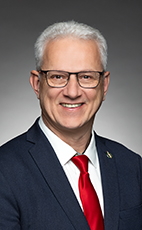
MP Stéphane Lauzon was first elected to the House of Commons in 2015 representing the electoral distrct of Argenteuil – La Petite-Nation and was re-elected in 2019 and 2021.
As a Member of Parliament, he currently serves as the Parliamentary Secretary to the Minister of Citizens’ Services. He previously served as Parliamentary Secretary to several different Ministers, including the Minister of Rural Economic Development and the Minister of Veterans Affairs. In addition, he has also served as a member of several parliamentary associations and interparliamentary groups, including the Canada-France Inter-Parliamentary Association and the Canada-United States Inter-Parliamentary Group.
Prior to entering federal politics, MP Lauzon worked in vocational training and owned a construction management company. In 2009, he was elected to the city council of Gatineau and chaired the municipal committee on sports and recreational matters.
Member of the following Committee(s):
- Standing Committee on Transport, Infrastructure and Communities
Issues raised relating to the Transport Canada portfolio:
- Rural connectivity
- Emissions produced by maritime vessels
- Impacts of climate change on the transportation sector
Dan Albas (Okanagan Lake West – South Kelowna, British Columbia)
Vice-Chair and CPC Critic for Transport
Conservative

Throughout his life, MP Dan Albas has lived in British Columbia, Yukon and Alberta. Since 1981, MP Albas has lived in Penticton, British Columbia. MP Albas attended Penticton Secondary School and Okanagan University College.
Prior to his entry into federal politics, MP Albas worked as a martial art instructor, eventually opening his own martial arts studio. As a small business owner, MP Albas has worked with the provincial and regional branches of the Chamber of Commerce. In 2008, MP Albas entered municipal politics and won a seat on the Penticton City Council. Of note, during his tenure as a city councilor, MP Albas iterated his belief that public transit should be funded through user fees. In this context, he voted against the procurement of new buses for BC Transit unless these were funded through higher fares and voted to raise fares by 25% to fund operational costs.
Following the retirement of Okanagan – Coquihalla MP Stockwell Day, MP Albas won the Conservative Party nomination and was subsequently elected to the House of Commons. Since the 41st Parliament (2011-2015), MP Albas has served on several committees, including on the Transport, Infrastructure and Communities (TRAN) from 2011-2012. Since the 42nd Parliament (2015-2019), MP Albas has served in several critic roles, including most recently as critic for Environment and Climate Change, from 2020 to 2025.
Member of the following Committee(s):
- Standing Committee on Transport, Infrastructure and Communities
Issues raised relating to the Transport Canada portfolio:
- Supports financing transportation services through user fees
- Management of the Port of Vancouver
- Supports electric vehicles
Philip Lawrence (Northumberland – Peterborough South, Ontario)
Conservative

MP Philip Lawrence was first elected to the House of Commons in 2019 representing the electoral district of Northumberland-Peterborough South and was re-elected in 2021. He was appointed as the Shadow Minister for Transport in September 2024 and has previously served as the Shadow Minister for National Revenue.
As a Member of Parliament, he has served as a member of several committees, including the Standing Committee on Public Accounts and the Standing Committee on Finance. He has also served as a member on several parliamentary associations and interparliamentary groups, including the Canada NATO Parliamentary Association and the Canada-Israel Interparliamentary Group.
Prior to entering federal politics, MP Lawrence obtained a Law degree from Osgoode Hall Law School and an MBA from the Schulich School of Business, spending over a decade as a practicing lawyer and financial planner.
Member of the following Committee(s):
- Standing Committee on Transport, Infrastructure and Communities (Vice-Chair)
- Subcommittee on Agenda and Procedure of the Standing Committee on Transport, Infrastructure and Communities
Issues raised relating to the Transport Canada portfolio:
- Effects of the carbon tax on rural communities
- Effects of transportation on the tourism industry
- Port authorities
- Transportation connectivity for rural communities
Leslyn Lewis (Haldimand—Norfolk, Ontario)
Conservative Critic for Infrastructure and Communities
Conservative

MP Leslyn Lewis is a Canadian lawyer who has served as the member of Parliament for Haldimand—Norfolk since 2021. MP Lewis contested the Conservative party leadership in 2020.
MP Lewis has a Bachelor’s Degree from the University of Toronto, Trinity College graduating Magna Cum Laude; a Master’s in Environmental Studies from York University with a concentration in Business and Environment from the Schulich School of Business; a Juris Doctorate from Osgoode Hall Law School; and a PhD in Law from Osgoode Hall Law School.
Before seeking office as a Member of Parliament, she was a business owner, having left a practice of law on Bay Street to start her own law firm.
Member of the following Committee(s):
- Standing Committee on Transport, Infrastructure and Communities
Issues raised relating to the Transport Canada portfolio:
- Air passenger protections
- Travel delays and the treatment of air and rail passengers
Dan Muys (Flamborough – Glanbrook, Ontario)
Conservative Associate Critic for Transport
Conservative

MP Dan Muys was first elected as the MP for Flamborough-Glanbrook in September 2021. He is currently associate critic for Transport.
Prior to seeking office, MP Muys worked in the private sector, specifically in the energy and agri-food sectors.
In a personal capacity, MP Muys is a member of the Rotary Club, the Flamborough Chamber of Commerce and the Copetown United Church. He has also served in the National Governance Committee of the Canadian Public Relations Society in a number of capacities.
Member of the following Committee(s):
- Standing Committee on Transport, Infrastructure and Communities
Issues raised relating to the Transport Canada portfolio:
- Relationship between municipalities and railway companies
- Fatigue management in the rail sector
- Supply chain resiliency
- Short-sea marine shipping
- Price competitiveness in the air sector for secondary airports
Xavier Barsalou Duval (Pierre-Boucher – Les Patriotes – Verchères, Québec)
Bloc Critic for Transport, Infrastructure and Communities
Bloc-Québécois

MP Xavier Barsalou Duval was first elected to the House of Commons on October 19, 2015 and re-elected in 2019 and 2021. He has a Master’s in Business Administration (MBA) and a Bachelor’s Degree in accounting.
Prior to his political career, he taught accounting at the college level and worked several years as an accounting auditor. MP Barsalou Duval has been highly implicated in his local Bloc Québecois and Parti Québecois riding associations since he was eighteen years old. He thereafter became President of the Forum Jeunesse of the Bloc Québecois, a position he held from 2012 to 2015. In his career, he has also been very active in the Mouvement Montréal français and in the Société Saint-Jean-Baptiste de Montréal.
During the 42nd Parliament, MP Barsalou Duval was the critic for the Economic Development, Government Operations, National Revenue and Public Accounts. He has been the parliamentary critic for the transport, infrastructure and communities portfolio since the opening of the 43rd Parliament in 2019.
Member of the following Committee(s):
- Standing Committee on Transport, Infrastructure and Communities
Issues raised relating to the Transport Canada portfolio:
- Delays at airports
- Lac-Mégantic rail bypass
- High frequency rail
- Viability of regional air transportation
- Interline agreements (air transportation)
- Air Passenger Protection Regulations
- Importance of official languages in the transportation sector
- Shoreline Protection Program
- Electrification of the transportation sector
Relevant TRAN Meetings
Please find below the ‘PCO report’ (prepared by ESDC Parliamentary Affairs) from the October 7, 2025 Standing Committee on Transport, Infrastructure and Communities (TRAN) meeting on “Changing Landscape of Truck Drivers in Canada.”
This summary is being sent for information purposes only and should not be quoted, as it may contain transcription errors.
Standing Committee on Transport, Infrastructure and Communities (TRAN)
Date: Tuesday, October 7, 2025, 3:30 p.m to 5:30 pm
Report prepared by: ESDC Parliamentary Affairs
Meeting topic: Changing Landscape of Truck Drivers in Canada
Members in Attendance:
LPC: Peter Schlefke (Président / Chair), Will Greaves, Mike Kelloway, Stéphane Lauzon, Chi Nguyen
CPC: Dan Albas (Vice-président / Vice-Chair), Phillip Lawrence, Leslyn Lewis, Jason Groleau, Chris Lewis
BQ: Xavier Barsalou-Duval (Vice-président / Vice-Chair)
Witnesses: 3:30 p.m. to 4:30 p.m.
Canadian Trucking Alliance
- Stephen Laskowski, President & Chief Executive Officer
- Geoffrey Wood, Senior Vice-President, Policy
- Jonathan Blackham, Director, Policy and Public Affairs
Trucking Human Resources Canada
- Angela Splinter, Chief Executive Officer
Women's Trucking Federation of Canada
- Shelley Walker, Chief Executive Officer
- Johanne Couture, Executive Director
4:30 p.m. to 5:30 p.m.
as an individual
- Steve Bourgeois, Consultant
Kriska Transportation Group
- Mark Seymour, Chief Executive Officer
Truck Training Schools Association of Ontario
- Ken Adams, Chairman of the Board
Highlights
The tone of the meeting was cordial, with members exploring solutions to stakeholder concerns about the trucking industry and to road safety due to the Driver Inc. mis-classification issue. There is general agreement that a team approach is needed and that federal government and national committees should begin auditing carriers. The focus during the second panel of witnesses was on training and safety risks involved with undermining provincial licencing standards, and a consensus that enforcement is needed to apply the structures that exist as the honour systems are being abused.
Opening remarks, Panel 1
The Canadian Trucking Alliance (CTA) states the problem with Driver Inc. has grown to a full-blown crisis which needs political will to resolve it. ESDC and CRA have studies the issue and both found rampant non-compliance. They provided the committee with a brief on solutions such as the federal government and national committees to begin auditing carriers.
The Trucking Human Resources Canada states that the deliberate misclassification of truck drivers as independent contractors rather than employees gravely impact three areas.
- Impact on employee protections, losing vital protections
- Impact on industry ability to recruit and retain workers due to improper practices - lack of protections
- Impact on Canadian priorities - with the current economic climate and trade issues, a safe and secure and compliant transportation infrastructure is vital
The Women's Trucking Federation of Canada spoke on the erosion of Driver Inc. over the misclassification issue which rewards evasion and punishes compliance. They raised public safety issues such as when drivers are misclassified there is no employer oversight and no one checking hours of service or training. They offered solutions such as coordinated enforcement and the need for a National Trucking Credential to restore integrity to the industry. They raised exploitation and forced labour, tax evasion and labour abuse.
Opening Remarks, Panel 2
Steve Bourgeois, consultant and certified trainer with Quebec Transportation, stated that under the table drivers de-value legitimate drivers by the exploitation of immigrants and the gig-ification of the industry. Essential for public safety he proposed that the federal government create a national database of insurance accessible to all provinces to verify validity of licences. Strengthen immigration control, have student visa, training standards and awareness campaigns.
The Truck Training Schools Association of Ontario spoke about the safety risks of carriers who buy or influence schools, fast track them through bare bones programs, undermine provincial licencing standards and shift the training liability away from these carriers. He raised concerns over the exploitation of students -labour trafficking, rising costs for safety risks, compliance violations and rising costs for legitimate carriers. They can’t compete with the prices and speed and risk of losing the best instructors and best schools.
He proposed solutions such as:
- Ownership transparency
- Mandate unannounced provincial audits instructor credentials etc
- Partner with CRA to trace irregular tuition flows and offshore payments
- National trucking credential
- Issue a secure passport
- Mandate orientation on labour rights and tax laws
- Fed-prov bodies to share date on repeat offenders and emerging risks
The Kriska Transportation Group claims that from a competitive standpoint they won’t be around long given the weakened industry that has been taken over by the underground economy. They’ve followed the rules and paid out ten sick days but have intentionally shrunk their business by 25% and can’t attract new people to their business or the tour industry.
Overview of Questions
Panel 1
Dan Albas asked the CTA to elaborate on the neglect by the government. A: T4As moratorium in 2011 was supposed to be temporary – an open gateway for misclassification and tax evasion. Critical that ESDC and CRA work together and have committed to doing so. Mr. Albas Sought confirmation that 85% of complaints regarding the Canda Labour Code stem from the trucking industry. Mr. Albas asked Women’s Trucking Association to elaborate of the exploitation forced labour. A: People coming to Canada through legitimate pathways, TFWP, LMIAs.
Mike Kelloway asked the Trucking Human Resources Canada and the CTA about the role the federal government with respect to roles and responsibility, to regulate the industry. A: Wonders why action hasn’t occurred. A Fall Economic Statement stated that PSBs is a big problem and that CRA will give us answers in the 2022/23 budget and there’s been silence since.
Are you looking for the fed gov to take more of a role?
Xavier Barsalou-Duval, referring to his press conference on these unfair labour practices, said that there has been no action by the government and proceeded to seek concurrence from witnesses. A: The T4A and PSB issue - $17,000 of tax evasion per Driver Inc driver has been lost, and it’s higher now. The CTA added that when ESDC met with trucking owners and found the were in gross violations, could not find 25% of them 30-45 days later for compliance visits.
Chi Nguyen sought information on the difficulty of recruitment as it related to Driver Inc. A: The CTA did a survey that 8-10 drivers want to be paidby the Driver Inc, model. Unless owners go to the underground economy they will not get drivers to drive their trucks.
Jason Groleau was interested in the illegal strategy of Driver Inc.
Leslyn Lewis asked the CTA if incorporation for truck drivers could work A: will pay more taxes and forego paid leave. She asked about driver fatigue and the enforcement of breaks and rest time and how Driver Inc. affects that A: enforcement of those rules are provincial responsibility. Asking federal government and national committees is to begin auditing carriers.
Will Greaves sought clarity from each organization on the prevalence of the mis-classification issue. With Ontario being the hub, asked what actions the Ontario government may have taken. In light of the scale of the problem
Panel 2
Jason Groleau sought M. Bourgeois perspective on the time it takes to get a driver’s licence, which can be done in a matter of a couple of hours or days, while in Quebec, should be 5 months of intensive training. He asked about government standards and checking licences A: It’s not functioning in Quebec,
Stéphane Lauzon picked up on the topic of training and asked if the federal government should become responsible for road transportation and training again or leave it with the provinces. He asked about the training process to get a licence in Quebec.
M. Lauzon asked Kriska Transportation Group what he meant by “don’t trust the industry” A: The honour system is being abused.
The CLC prohibits misclassification/ We have the rules, police, licence, the structure exists but is not being applied. The Truck Training Schools Association of Ontario stated the need for more investigators and police on the roads.
Xavier Barsalou-Duval asked M. Bourgois about the safety concerns he raised given the lack of proper training, as well as the future of the sector.
Chris Lewis questioned the witnesses on training and on the industry standard in Ontario.
Mike Kelloway was interested in what can be done provincially for training and what the federal government do to support it.
Xavier Barsalou-Duval picked up on better training solutions and enforcement for federal and provincial governments.
Michael Barrett asked the Kriska Transportation Group if current enforcement of training by the federal government is enough. He asked about the Impact on local jobs and If the thinks national safety code 16 should be mandatory and if would help if enforced.
Chi Nguyen asked if Kriska Transportation Group about downsizing the company. Mr. Seymour noted that they are not losing drivers to Driver Inc.
Stéphane Lauzon asked M. Bourgois to elaborate on irregularities he raised with drivers tests which is contrary to the SAAQ website. M. Bourgois said there’s an investigation of bribery to obtain licences (public information). He claims that drivers can get licences without understanding English or French.
Next Steps
The committee will meet on Thursday, October 9, to continue its study of the changing landscape for truckers in Canada.
Please find below the ‘PCO report’ for the October 9, 2025 Standing Committee on Transport, Infrastructure and Communities (TRAN) meeting on “Changing Landscape of Truck Drivers in Canada.”
This summary is being sent for information purposes only and should not be quoted, as it may contain transcription errors.
Standing Committee on Transport, Infrastructure and Communities (TRAN)
Date: Thursday, October 9, 2025, 8:23 a.m to 10:38 a.m.
Report prepared by: Rossano Bernardi, Parliamentary and Cabinet Affairs Division,
Public Affairs Branch - Canada Revenue Agency
Meeting topic: Changing Landscape of Truck Drivers in Canada
Members in Attendance:
LPC: Peter Schlefke (Chair), Will Greaves, Mike Kelloway, Stéphane Lauzon, Chi Nguyen
CPC: Dan Albas (Vice-Chair), Phillip Lawrence, Leslyn Lewis, Jason Groleau, Chris Lewis
BQ: Xavier Barsalou-Duval (Vice-Chair)
Witnesses: 8:15 a.m. to 9:15 a.m.
- Atlantic Provinces Trucking Association
- Spring Creek Carriers Inc.
- Transport St-Pamphile Inc
9:15 a.m. to 10:15 a.m.
- Fraternité des constables du contrôle routier du Québec
- Teamsters Canada
- Toronto Police Service
Summary
Various stakeholder witnesses were invited to appear before TRAN as part of their minimum six-meeting study on ‘Changing Landscape of Truck Drivers in Canada.’ This was TRAN’s second meeting as part of the study. TRAN is expected to hear from the Minister of Transport, Secretary of State (Labour), and Secretary of State (Canada Revenue Agency and Financial Institutions) at future meetings as part of the study (as per the motion adopted on September 18, 2025).
Opening Statements:
Panel 1
- Atlantic Provinces Trucking Association noted that Drivers Inc has weakened safety in trucking industry as “the cheaters are winning” and those that follow the law cannot compete with the bad actors. Drivers Inc is allowing an illegal model to flourish – which is leading to “payroll fraud, tax fraud, labour fraud” that is “costing Ottawa billions of dollars.” Atlantic Provinces Trucking Association said the use of Drivers Inc allows these firms to undercut legitimate carriers by 25-30% per driver. Atlantic Provinces Trucking Association said it was “deeply concerned” with the continued T4A moratorium, which removes accountability and enabled a widespread underground economy to thrive. They also complained that Drivers Inc is leading to cutting corners on maintenance (making highways less safe) and a driver shortage (as many don't want to join an industry where the law-breakers are calling the shots). Atlantic Provinces Trucking Association pleaded for the Government to lift the T4A moratorium immediately, as well as provide more resources to CRA and ESDC to hire auditors to enforce laws and better information sharing among federal departments. Atlantic Provinces Trucking Association also requested the government and crown corporations stop using Drivers Inc fleets, as well as accelerate the work that Transport Canada is doing on a national carrier database.
- Spring Creek Carriers Inc. also noted Drivers Inc allows these firms to undercut legitimate carriers - complaining the federal government “has gone too far allowing individuals and markets to break every conceivable law to line their own pockets” – failing to combat tax evasion, labour and immigration abuse, corruption, violation of employee rights evident in the trucking industry. Spring Creek Carriers Inc. begged the government to “restore law and order to our industry … we're in a crisis and if nothing is done today this lawlessness will decimate our industry.”
- Transport St-Pamphile Inc. echoed concerns that Drivers Inc was undermining legitimate trucking firms – flooding the industry with drivers with “neither knowledge nor respect for those with whom they share the road” (pointing to various examples of unsafe practices like stealing fuel, not knowing how to open the hood of their trucks, putting windshield washer fluid on the ground to get vehicles unstuck, not maintaining their equipment, etc.) Transport St-Pamphile Inc, agreed this is causing many professional drivers to leave the industry, calling the situation a “nightmare.”
Panel 2
- Fraternité des constables du contrôle routier du Québec complained that Drivers Inc. was undermining road safety, and that more work was need to enforce rules and regulations regarding hours of behind the wheel for drivers due to extensive loopholes associated with electronic logbooks and their inability to confirm valid insurance. Fraternité des constables du contrôle routier du Québec called for federal leadership on driver hours and better, more transparent ways to ensure electronic logbooks are accurate.
- Teamsters Canada noted it had been raising awareness and speaking to the government on Drivers Inc “for just under a decade” but there has been a lack of enforcement and “we are in effect crisis compliance”, noting that despite commitments in 2022 and 2024 from the federal government to address the problem that “we remain far from accomplishing this and more needs to be done.” Teamsters Canada said the main issue was drivers who have been tricked force or required to incorporate for employers to bypass the mandatory deductions and other cost savings – as well as “untrained and undertrained drivers with questionable insurance licensing and certification.” While recognizing some work had been done, Teamsters Canada stressed it was not enough – especially as the “onus does remain on the employee whose circumstances are already precarious to lodge complaint or to raise these issues.” Teamsters Canada called for more coordination between the federal and provincial governments, national misclassification blitz, a national database by Transport Canada, and a thorough review of the use of temporary foreign worker program.
- Toronto Police Service noted it was increasingly dealing with compliance issues involving trucking, despite having a very limited number of officers are actually properly trained to do such.
Question and Answer Portion:
Panel 1
- CPC TRAN Member Dan Albas declared the Conservatives want to restore safety to the trucking industry and crack down on these bad actors, asking how the current Government’s policies have fueled Drivers Inc and asked for specifics on what government departments and crown corporations are currently using Drivers Inc fleets; Atlantic Provinces Trucking Association pointed to the immigration fraud and temporary foreign worker program abuse from other provinces affecting the trucking industry in Atlantic Canada (and ‘poaching lanes from compliant carriers’). With respect to government departments and crown corporations are currently using Drivers Inc fleets, Atlantic Provinces Trucking Association noted it was mainly anecdotal at this point (saying Canada Post was often cited as an example), but that no screening process exists to prevent such.
- CPC TRAN Member Dan Albas asked if the Secretary of State responsible from CRA (Wayne Long) had met with the Atlantic Provinces Trucking Association yet; Atlantic Provinces Trucking Association noted it had not met with Long yet – but they would tell him that “CRA needs to immediately lift the moratorium on T4A to start creating a paper trail so that we can begin to track those who may be shirking their tax obligations.”
- CPC TRAN Member Dan Muys wonder what the single biggest failure of federal enforcement was that has lead to Drivers Inc; Spring Creek Carriers Inc. noted that CRA was where the most action was needed – mainly lifting the moratorium on T4As “allowing a paper trail” to find the bad actors (and collecting billions in unpaid taxes), adding that CTA and others have been “a lack of political will, as we've been we've been chasing this up the chain for probably a decade.”
- Liberal TRAN Member Mike Kelloway questioned if the 2011 moratorium on T4As had any merit when originally done; Atlantic Provinces Trucking Association noted the problem was not ‘deregulation’ but uneven and unequal treatment of trucking firms (as some are avoiding paying CPP, EI, WSIB, etc.) Spring Creek Carriers Inc. and Transport St-Pamphile Inc. both agreed with that assessment.
- Liberal TRAN Member Mike Kelloway, who appreciated many federal rules need to be tight tightened considerably – especially at CRA, also wondered how provinces and territories can better provide oversight; Atlantic Provinces Trucking Association agreed that better training is needed, as well as things like more roadside blitzes / enforcement (especially in Ontario, are those drivers are often in Atlantic Canada). Transport St-Pamphile Inc. agreed more training / maintenance checks were needed.
- BQ TRAN Member Xavier Barsalou-Duval asked if safety standards are declining due to Drivers Inc; Atlantic Provinces Trucking Association agreed that many drivers are “fearful of their lives a lot of days now when they when they go on the road.” Spring Creek Carriers Inc. noted that more joint efforts between jurisdictions is needed as Drivers Inc had led to cheating on taxes, training, labour laws, immigration, etc. Spring Creek Carriers did point to some positive work by the Ontario government with WSIB carrier audits and joint enforcement at the Whitby scale (with the Ontario Transport and Finance Ministries) – but complained that “CRA doesn't want to jump in the same sandbox and share that information.” Transport St-Pamphile Inc. suggested that federal government inspectors should directly visit businesses to ask the proper questions.
- CPC TRAN Member Jason Groleau asked if the federal government was doing enough to combat Drivers Inc; Transport St-Pamphile Inc. bemoaned it did not have support and the industry was being left to “figure it out for yourselves” – complaining legitimate firms are forced to comply with more strenuous or stringent rules than ‘cheaters.’
- Liberal TRAN Member Stéphane Lauzon noted lifting the moratorium on T4As ‘cannot solve everything’ and asked what else was needed; Atlantic Provinces Trucking Association pointed to a uniform national carrier database across all provinces would help prevent those that try to evade enforcement by ‘ghosting’ (i.e. changed names), but strongly stressed that lifting the moratorium on T4As itself would “almost immediately see positive benefits for this issue … (it would) restore a paper trailing within one tax year you know we'll see noncompliance likely drop sharply because these companies in these drivers now know that their transactions are being tracked.” Spring Creek Carriers Inc. again stressed a more collaborative enforcement approach was needed between federal and provincial organizations to track non-compliance.
- CPC TRAN Member Chris Lewis asked if the trucking industry had effective communication with the federal government; Spring Creek Carriers Inc. noted it (via the Ontario Trucking Association / Canadian Trucking Alliance) has a ‘great relationships with all levels of government and “they've all been made aware of this over the last 10 years, there's no one of substance that that actually can do something about it that doesn't know about it.”
- CPC TRAN Member Chris Lewis wondered what freight is more impacted by Drivers Inc; Atlantic Provinces Trucking Association and Spring Creek Carriers Inc. both noted it was mainly general / refrigerated freight (grocery suppliers) as opposed to heavy and oversized freight.
- Liberal TRAN Member Chi Nguyen asked if ESDC audit work was a positive step; Atlantic Provinces Trucking Association agreed that was a positive step, but more joint work was need at the scale identifying carriers and drivers who are circumventing all the laws (especially at CRA), as well as better use of WCB data as that would allow auditors to identify problems quicker.
Panel 2
- CPC TRAN Member Chris Lewis again wondered what freight is more impacted by Drivers Inc; Teamsters Canada explained it was quite diverse, but general and refrigerated freight would be the main focus. CPC TRAN Member Chris Lewis ask how long this had been a major issue; Teamsters Canada remarked that “since 2018 we started to realize that this is actually something that's going to surface in ways that that are extremely dangerous”, though since 2021 the federal government has started taking some initial steps to address it – adding also that the temporary formwork program had been particularly abused with a major problem being “a lot of carriers are sponsoring workers from other countries to come drive and then requiring them to incorporate that first and foremost should not happen” and “these companies end up completely controlling the fate of this worker … and he worker can no longer move from one company to another.”
- Liberal TRAN Member Stéphane Lauzon asked about the challenges with dealing with drivers that do not speak English or French; Fraternité des constables du contrôle routier du Québec noted there is no legislation that indicates that the person has to speak either French or English – so they figure a way out the driver will call their boss and it is a situation they are seeing more often.
- BQ TRAN Member Xavier Barsalou-Duval asked about issues with electronic logbooks, and the ability of drivers to make changes without verification; Fraternité des constables du contrôle routier du Québec said they must wait for a email to confirm the information that can take 30 minutes and be altered in advance (noting that Saskatchewan provincial government has found a way to allow to see if amendments have been made). It was also agreed that getting the relevant information federal organizations would be useful too.
- CPC TRAN Member Jason Groleau said addressing the federal government does not seem willing to take the ‘simple’ step to reinstate T4As to help fix the problem; Fraternité des constables du contrôle routier du Québec complained that situation is getting worse, now seeing “things that we never saw 10-15 years ago”, made worse by fake insurance documents as well.
- BQ TRAN Member Xavier Barsalou-Duval noted that Drivers Inc. creates a situation that penalizes firms with unionized labour; Teamsters Canada agreed.
- CPC TRAN Member Leslyn Lewis inquired why “despite years of warning the federal government has stood by while unsafe and illegal employment schemes take root … with no meaningful enforcement”; Teamsters Canada explained the federal government, while it has taken some action and invested some money, more is needed – especially coordination with the provinces.
- Liberal TRAN Member Mike Kelloway asked Teamsters Canada for other possible solutions tied to coordination; Teamsters Canada called for better training as well as looking at treating truck driving like red seal trades to help ensure recognition of the value of the career.
Committee Business: N/A
Follow-ups: N/A
| Study | Next Meeting Dates & Steps | Deadline to Complete Study | Date Study Agreed To or Referred |
|---|---|---|---|
| Changing Landscape of Truck Drivers in Canada | TBD | TBD | September 18, 2025 |
Please find below the ‘PCO report’ (prepared by Transport Canada Parliamentary Affairs) from today’s (October 21, 2025) Standing Committee on Transport, Infrastructure and Communities (TRAN) meeting on “Changing Landscape of Truck Drivers in Canada.”
This summary is being sent for information purposes only and should not be quoted, as it may contain transcription errors.
COMMITTEE REPORT
Name of the Committee: Standing Committee on Transport, Infrastructure and Communities
Date and Time: October 21, 2025, 3:30 p.m. to 5:30 p.m.
Location: Room 125-B, West Block (and Webcast)
Study: Changing Landscape of Truck Drivers in Canada
Drafted by: Justin Bernard, Senior Parliamentary Affairs Advisor
Meeting topic: Changing Landscape of Truck Drivers in Canada
Witnesses: 3:30 p.m. to 4:30 p.m.
As an individual
- Harman Bhangu, MLA, Member of the Legislative Assembly of British Columbia, Jobs and Economic Development Critic (by videoconference)
Canada Truck Operators Association
- Arjun Vishwanth, Policy Advisor
Professional Truck Training Alliance of Canada
- Kim Richardson, Senior Advisor (by videoconference)
4:30 p.m. to 5:30 p.m.
As an individual
- Ritesh Kotak, Lawyer, Technology Analyst
Mitton & Associates Inc.
- Blaine Mitton, President
Office of the Auditor General of Ontario
- Shelley Spence, Auditor General
Overview of Appearance:
*Note that this summary was drafted using artificial intelligence*
Motions and Committee Business:
A motion was introduced by Mr. Barcelot Duval (Bloc Québécois) requesting that the Canada Truck Operators Association provide a complete and current list of its members and funders. A friendly amendment was proposed by Mr. Albus (Conservative Party of Canada) to apply this requirement to all associations and witnesses appearing before the committee. The motion, as amended, was adopted unanimously. The Chair also confirmed that the committee’s budget for the study was adopted with unanimous consent.
Meeting Overview:
Meeting #11 of the Standing Committee on Transport, Infrastructure and Communities resumed its study on the changing landscape of truck drivers in Canada. The tone of the meeting was serious and focused, with Members expressing concern over the implications of the “Drivers Inc.” model. Witnesses included Harman Bangu, MLA for British Columbia and Jobs and Economic Development Critic, Arjun Vishwanth, Policy Advisor for the Canada Truck Operators Association, Shelley Spence, Auditor General of Ontario, Ritesh Kotak, lawyer and technology analyst, and Blaine Mitten, President of Mitten and Associates Inc. The testimony covered a range of issues including misclassification of drivers, tax avoidance, safety concerns, exploitation of temporary foreign workers, and the need for regulatory enforcement.
- Harman Bangu (MLA, British Columbia) emphasized the exploitative nature of the Drivers Inc. model, particularly its impact on temporary foreign workers. He described how drivers are misled into incorporating without understanding the financial and legal implications, resulting in lack of benefits, tax liabilities, and unsafe working conditions. He called for clear definitions of employment status, stronger enforcement, and protections for vulnerable workers.
- Arjun Vishwanth (Canada Truck Operators Association) challenged the narrative around Drivers Inc., arguing that it is a lawful and voluntary model used by small and medium-sized carriers, many of which are minority-owned. He disputed claims of significant tax losses and emphasized that drivers choose incorporation for autonomy. He criticized enforcement practices as prejudicial and called for modernization of classification rules, focusing on voluntariness rather than ownership of equipment.
- Shelley Spence (Auditor General of Ontario) presented findings from a 2019 audit on commercial vehicle safety. She reported a decline in roadside inspections and highlighted gaps in training and testing, particularly among carriers allowed to certify their own drivers. She noted that many unsafe vehicles could have been removed from roads with more inspections and recommended stronger oversight and enforcement.
- Ritesh Kotak (Lawyer and Technology Analyst) explained the legal distinctions between employees and independent contractors. He warned that misclassification allows employers to avoid obligations and leaves workers vulnerable. He advocated technological solutions such as pattern recognition and AI-driven tools to identify non-compliant carriers and improve enforcement.
- Blaine Mitten (Mitten and Associates Inc.) described the economic impact of Drivers Inc., estimating billions in lost tax revenue and unfair competition for compliant carriers. He proposed a penalty ladder for enforcement and emphasized the need for CRA action. He also linked the erosion of compliance culture to broader societal issues, including crime and safety risks.
- Liberal Party of Canada: Members such as Ms. Nguyen acknowledged the complexity of the issue and emphasized the need for balanced enforcement and education. They supported the idea that incorporation is not inherently problematic but must be accompanied by proper classification and protections. Members also highlighted the importance of cultural competence in enforcement and the need to avoid targeting minority communities.
- Conservative Party of Canada: Mr. Albas and Mr. Lawrence expressed concern over the exploitation of temporary foreign workers and the undermining of legitimate businesses. They supported stronger enforcement and questioned the credibility of witnesses defending the Drivers Inc. model. Mr. Lawrence pressed for clarity on legal interpretations and challenged inconsistencies in testimony.
- Bloc Québécois: Mr. Barsalou-Duval focused on transparency and accountability, introducing the motion for associations to disclose their membership and funding. He also raised concerns about safety and the need for a national registry of infractions to better track non-compliant carriers.
Transport Canada was referenced multiple times, particularly in relation to its enforcement role and the Canada Labour Code. Witnesses criticized the lack of federal action and called for clearer guidelines and stronger penalties to address misclassification and safety concerns.
Next Steps: The committee is expected to resume its study next week. The Minister of Transport and the Minister of Labour along with TC and ESDC officials are expected to appear on October 30. The Minister of State for Revenue and CRA officials are expected to appear on November 6.
COMMITTEE REPORT
Name of the Committee: Standing Committee on Transport, Infrastructure and Communities (TRAN)
Date and Time: October 28, 2025, 3:30 p.m. to 8:33 p.m.
Location: Room 025-B, West Block, with videoconference
Study: Changing Landscape of Truck Drivers in Canada
Witnesses: Association du camionnage du Québec
- Marc Cadieux, Chief Executive Officer
- Josyanne Pierrat, Director of Compliance and Legal Affairs
Insurance Bureau of Canada
- Maximilien Roy, Interim Vice President, Strategy
- Cecilia Omole, Manager, Commercial Policy
Professional Truck Training Alliance of Canada
- Kim Richardson, Senior Advisor (by videoconference)
As individuals
- Edward Webb, Lead Safety Auditor (by videoconference)
- Gurpreet Chatwal, Chartered Professional Accountant, Tax Specialist
- Amarjot Singh Sahney, Former Owner-Operator and Driver
Overview of Appearance
*Please note that this summary was produced with the assistance of AI tools*
Motions and Committee Business:
During the meeting, MP Mr. Barsalou-Duval (Bloc Québécois) moved a motion to extend the current study on the evolving landscape of truck driver employment models in Canada. He proposed holding two to three additional meetings to hear from victims of trucking-related tragedies and advocacy organizations such as Justice for Truck Drivers and the Joy Smith Foundation. The Chair agreed to circulate the motion in both official languages and suspended the meeting to allow for discussion and debate.
The motion was debated at length and the committee meeting adjourned before a decision was taken.
Meeting Overview:
Witness Testimony
Mr. Cadieux (Quebec Trucking Association) described the Driver Inc. model as a widespread scheme that undermines fair competition and contributes to tax evasion and unsafe road conditions. He recommended mandatory T4A issuance and stronger enforcement powers for government agencies. He criticized the slow pace of federal action and urged decisive steps to restore fairness in the industry.
Mr. Roy (Insurance Bureau of Canada (IBC)) attributed the rising cost and frequency of insurance claims in the trucking sector to inadequately trained drivers, fraud, and high turnover. He recommended harmonized entry-level training across provinces, a centralized insurance database to detect fraud, and mandatory employment history documentation for drivers. He emphasized the need to treat trucking as a profession and improve road safety through better training.
Mr. Richardson (Professional Truck Training Alliance of Canada (PTAC)) advocated for truck driving to be recognized as a Red Seal trade and for training programs to be standardized nationwide. He criticized Transport Canada for offloading responsibilities to provinces and called for federal leadership in regulating driver education and addressing the misclassified driver model. PTAC is developing a national instructor accreditation course and online education tools to raise awareness about Driver Inc.
Mr. Webb (Safety Auditor) highlighted inconsistencies in training standards across provinces and the lack of oversight in driver education. He recommended standardized safety audits, mandatory use of asset monitoring technologies, and improved training for company owners and managers. He argued that safety issues stem from inadequate training and oversight rather than the employment model itself.
Mr. Chatwal (Chartered Professional Accountant) disputed claims of large-scale tax evasion under the Driver Inc. model, asserting that the Canadian tax system ensures neutrality between employment and incorporation. He criticized the Canadian Trucking Alliance’s costing model as flawed and emphasized that cost differences are due to deferrals, not evasion. He cautioned against industry-specific T4A mandates without broader tax policy considerations.
Mr. Sahney (Former Owner-Operator and Driver) shared a personal perspective on the Driver Inc. model, noting its appeal to immigrant drivers seeking flexibility and autonomy. He described exploitative conditions faced by temporary foreign workers and argued that incorporation offers dignity and control. He urged the Committee to address root causes of safety issues, such as poor infrastructure, lack of rest areas, and discrimination, rather than targeting the Driver Inc. model.
Party Positions
Liberal TRAN MPs expressed concern about the safety implications of the Driver Inc. model and emphasized the need for harmonized training standards across provinces. Parliamentary Secretary Mike Kelloway supported continued investment through Employment and Social Development Canada (ESDC) and called for improved data sharing between federal and provincial agencies. Liberal TRAN Member Chi Nguyen focused on insurance affordability and fraud prevention, advocating for a centralized national database. Liberal MP Iqwinder Gaheer focused on the lack of data differentiating safety outcomes between incorporated and employee drivers. He questioned the validity of claims linking Driver Inc. to increased accidents and emphasized the need for evidence-based policy. He also raised concerns about the exploitation of immigrant drivers and the importance of protecting workers’ rights.
Conservative MPs criticized the federal government’s perceived inaction on the Driver Inc. issue. CPC TRAN Member Chris Lewis highlighted the impact on local economies and road safety, calling for the reintroduction of mandatory T4A forms and federal student loan access for truck driver training. CPC TRAN Member Phillip Lawrence questioned the rise in insurance claims and emphasized the need for stronger enforcement of National Safety Code standards.
BQ TRAN Member Xavier Barsalou-Duval strongly supported extending the study and hearing from victims of trucking-related incidents. He challenged Mr. Chatwal’s tax arguments and emphasized that the Driver Inc. model provides financial advantages to employers, undermining fair competition and labor protections.
Criticism of Transport Canada: Multiple witnesses and Members of Parliament criticized Transport Canada for its limited role in regulating truck driver training and enforcement. Witnesses called for stronger federal leadership, particularly in harmonizing training standards and addressing the misclassified driver model. Transport Canada was described as having offloaded responsibilities to provinces, resulting in fragmented oversight and enforcement.
Next Steps: The meeting adjourned at 8:33 p.m. due to the absence of available translation services. Discussions on the motion put forth by MP Barsalou-Duval are expected to continue at a later date.
COMMITTEE REPORT
Name of the Committee: Standing Committee on Transport, Infrastructure and Communities (TRAN)
Date and Time: October 30, 2025, 8:15 p.m. to 10:15 p.m.
Location: Room 035-B, West Block, with videoconference
Study: Changing Landscape of Truck Drivers in Canada
Appearing (8:15 a.m. to 10:15 a.m.)
- Hon. Patty Hajdu, P.C., M.P., Minister of Jobs and Families
- Hon. Steven MacKinnon, P.C., M.P., Minister of Transport and Government House Leader
Witnesses
Department of Employment and Social Development
- Sandra Hassan, Deputy Minister of Labour and Associate Deputy Minister of Employment and Social Development
Department of Transport
- Arun Thangaraj, Deputy Minister
- Melanie Vanstone, Director General, Multi-Modal and Road Safety Programs
9:15 a.m. to 10:15 a.m
Department of Employment and Social Development
- Sandra Hassan, Deputy Minister of Labour and Associate Deputy Minister of Employment and Social Development
- Gary Robertson, Senior Assistant Deputy Minister
- Brenda Baxter, Assistant Deputy Minister
- Michael MacPhee, Assistant Deputy Minister, Temporary Foreign Workers Program
Department of Transport
- Melanie Vanstone, Director General, Multi-Modal and Road Safety Programs
Key Takeaways
The Standing Committee on Transport, Infrastructure and Communities convened to continue its study on the changing landscape of truck drivers in Canada. The meeting focused on the growing concerns surrounding the Driver Inc. model, worker misclassification, and road safety. The tone of the meeting was serious and, at times, contentious, reflecting the urgency and complexity of the issues at hand.
Testimony was provided by the Honourable Patti Hajdu, Minister of Jobs and Families, and the Honourable Steven MacKinnon, Minister of Transport and Government House Leader. They were accompanied by senior officials from Employment and Social Development Canada (ESDC) and Transport Canada. Witnesses discussed recent federal initiatives to address misclassification in the trucking industry, enforcement challenges, and interjurisdictional collaboration. The committee also heard from departmental officials in a second round of testimony.
Motions and Committee Business
A motion was moved by MP Xavier Barselou-Duval (Bloc Québécois) requesting that the Ministers of Transport and ESDC provide all correspondence and emails related to noncompliance in the transport sector within 30 days. An amendment was put forward to limit the scope to documents from 2008 onward. During discussion, members raised concerns about privacy, jurisdictional overlap with provinces, and the potential delay to the committee’s final report. No decision was taken on the motion, as the meeting was adjourned by the Chair.
Future Agenda: There was no formal announcement of future meetings, but members discussed the possibility of extending the study to hear from additional witnesses, including victims of road safety incidents.
Witness Testimony (Panel I)
Hon. Patti Hajdu, Minister of Jobs and Families: Minister Hajdu emphasized the federal government’s commitment to addressing worker misclassification in the trucking sector. She highlighted the creation of a national misclassification enforcement team in 2023 and the allocation of $26.3 million to support inspections. Since April 2023, over 650 inspections have been conducted, resulting in 129 confirmed cases of misclassification. She announced a new $77 million investment over four years for the Canada Revenue Agency (CRA) to enhance compliance efforts and lift the moratorium on T4A reporting.
Hon. Steven MacKinnon, Minister of Transport and Government House Leader: Minister MacKinnon reaffirmed the government’s commitment to road safety and fair competition in the trucking industry. He acknowledged the challenges posed by the Driver Inc. model and emphasized the importance of intergovernmental collaboration. He noted that Transport Canada works closely with provinces and territories through the Canadian Council of Motor Transport Administrators (CCMTA) to develop and enforce safety standards.
Witness Testimony (Panel II)
Sandra Hassan, Deputy Minister of Labour, ESDC: Ms. Hassan outlined the legislative changes made to the Canada Labour Code in 2021 and 2024 to combat misclassification. These include shifting the burden of proof to employers and making misclassification illegal regardless of intent. She described the work of the dedicated inspection team, which has conducted over 1,000 interventions, including 400 awareness sessions.
Melanie Vanstone, Director General, Multimodal and Road Safety Programs, Transport Canada: Ms. Vanstone explained that driver training and licensing fall under provincial jurisdiction, but Transport Canada collaborates with provinces through the CCMTA to maintain the National Safety Code. She acknowledged concerns about “chameleon carriers” and the need for better data sharing to close regulatory loopholes.
Party Positions
Liberal Party of Canada: Liberal MPs, including Parliamentary Secretary Kelloway, emphasized the government’s proactive measures to address misclassification and road safety. They highlighted the investments in CRA and ESDC enforcement, the importance of intergovernmental collaboration, and the need to protect vulnerable workers. MP Greaves focused on the need for stronger enforcement and better coordination between federal and provincial governments. He emphasized the importance of protecting workers from exploitation and ensuring that safety standards are upheld. He also questioned the effectiveness of current education efforts and called for more tangible outcomes.
Conservative Party of Canada: Conservative MPs, including MP Albas, MP Philip Lawrence, and MP Chris Lewis, were critical of the government’s handling of the Driver Inc. issue. They accused the government of inaction over the past decade and questioned the effectiveness of recent measures. MP Lawrence repeatedly pressed for a specific date by which the Driver Inc. model would be eliminated.
Bloc Québécois: Bloc MP Barselou-Duval expressed skepticism about the government’s commitment to addressing Driver Inc., noting that many of the announced measures were long overdue. He criticized the slow pace of enforcement and the limited number of inspections relative to the scale of the problem.
Page details
2026-02-12