Submitted by Anonymous (not verified) on Sun, 11/29/2015 - 02:16
deceased settlor of Trust B was an affiliated contributor to her brother, who contributed to Trust A
Mr. X was the settlor and is sole beneficiary of Trust A and is its trustee along with his brother. The trustees of Trust B, which was a...
The text of this content is paywalled except for the first five days of each month. Subscribe or log in for unrestricted access.
Principales Questions: Whether two trusts are affiliated with each other pursuant to subparagraph 251.1(1)(h)(i) when the contributor to one of the trusts dies after the trust was settled.
Position Adoptée: In the context of this file, we concluded that the two trusts are affiliated under subparagraph 251.1(1)(h)(i).
Raisons: Based on CRA response in document 2014-0534851C6 which indicated that for the purposes of the definition of "contributor" in subsection 251.1(3), CRA is of the view that, depending on the context, a deceased person may be considered to have, at a given time, made a loan or a transfer of property, either directly or indirectly, in any manner whatever, to or for the benefit of a trust. This position applies to any transfer of property made as a consequence of death of a taxpayer as well as to any loan or transfer of property made by a taxpayer, before his or her death.
Submitted by Anonymous (not verified) on Sun, 11/29/2015 - 02:17
only an estate, not a testamentary trust, can qualify
Where the will of the deceased creates a spousal testamentary trust which receives a part or all of the deceased's property, can the spousal trust...
The text of this content is paywalled except for the first five days of each month. Subscribe or log in for unrestricted access.
Principales Questions: In a situation where an individual dies, the will creates a spousal testamentary trust which receives a part or the total of the patrimony of the deceased, can the spousal trust choses to be graduated rate estate?
Position Adoptée: No
Raisons: Wording of the definition of graduated rate estate.
Submitted by Anonymous (not verified) on Sun, 11/29/2015 - 02:18
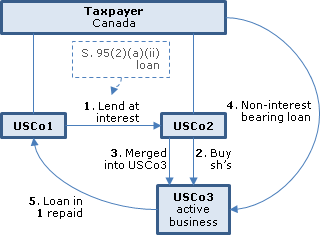
debt owing to CFA parent, which had funded active business assets and was assumed on absorptive merger, qualified under s. 17(8.1)(b)
CFA 2, a controlled foreign affiliate of the taxpayer (a corporation resident in Canada), used the proceeds of a loan received from another CFA...
The text of this content is paywalled except for the first five days of each month. Subscribe or log in for unrestricted access.
Principales Questions: Whether a non-interest-bearing loan made by a Canadian corporation to a controlled foreign affiliate can qualify for the exception under paragraph 17(8)(a) where the proceeds of the loan are used to repay a debt that was assumed following a downstream absorptive merger.
Position Adoptée: Yes
Raisons: 17(8)(a)(i) can apply, by virtue of 17(8.1)(b) and 17(8.2), provided that the amount owing that was repaid with the proceeds of the non-interest-bearing loan was in respect of assets previously acquired by the surviving company which were used to earn active business income throughout the time that the amount was owed by the surviving company.